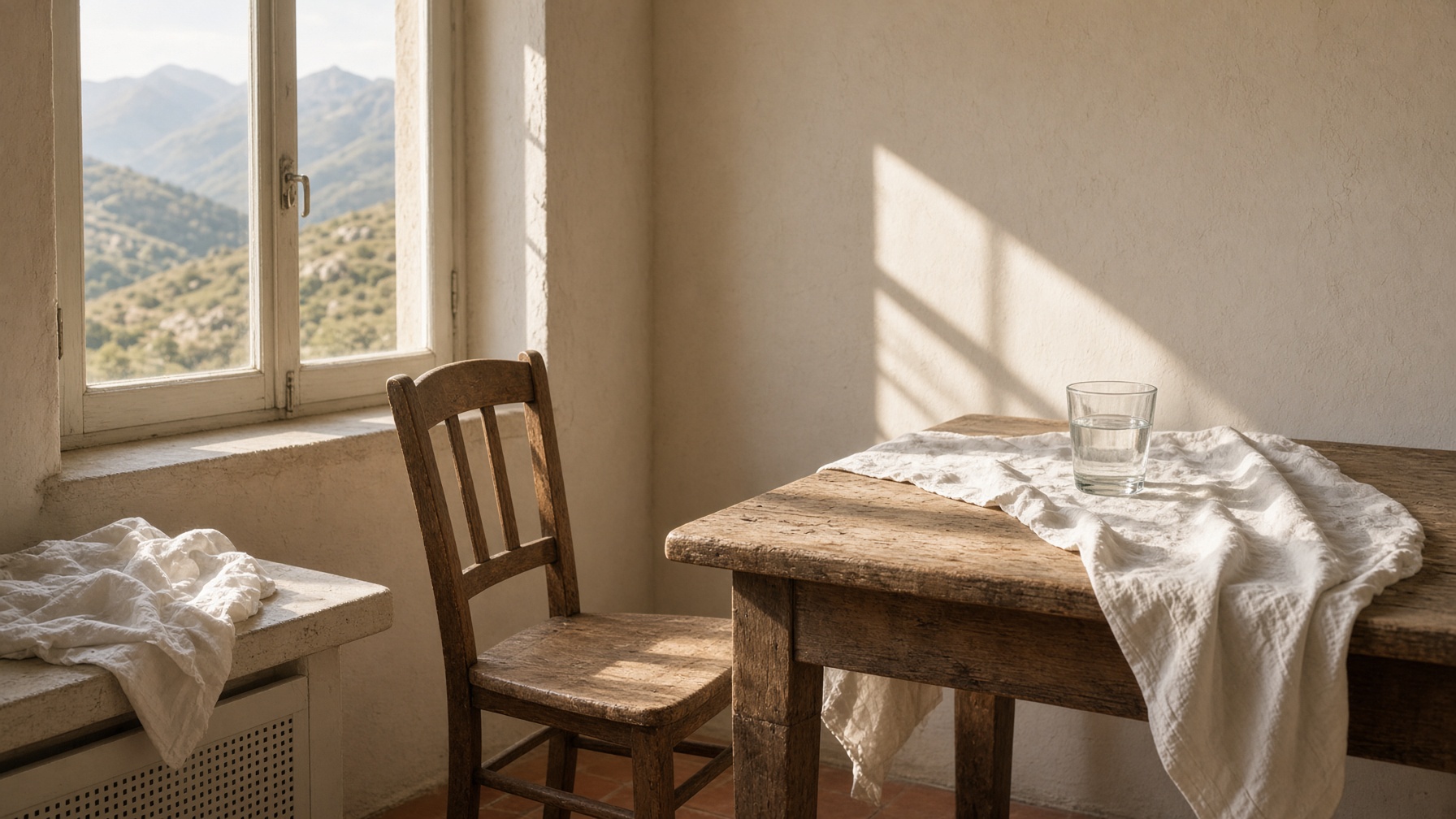
The chair is still there. Not as a shrine. As a habit. You walk into the room and your body knows where not to sit, the way it knows which stair complains. In Gallo Matese the empty chair is not a metaphor first. It is furniture. Then, if you stay long enough, it becomes the sentence the family cannot finish out loud.
Sunday is the only calendar that never emigrated. Even when the town thinned, even when the 1921 census — 3,417 souls, the documented peak — became a story the old men told with their hands, the table kept its length. Plates for whoever arrived from Caserta, from the Bronx, from the next room. One plate that stayed in place after the person did not.
Gallesi will tell you they are not sentimental. They will also tell you not to move that chair. Both can be true. The mountain taught a practical grief: keep the place, keep the name, keep the beans soaking. Talk about the weather. Let the chair do the rest.
If you come as a visitor, you will be offered the good seat, never the empty one. Take it. Leave the other where it is. That is the whole etiquette of Ru Uàllë, if you want it in one gesture.