The full introduction — 8 minutes — is on this site. The first movements are here.
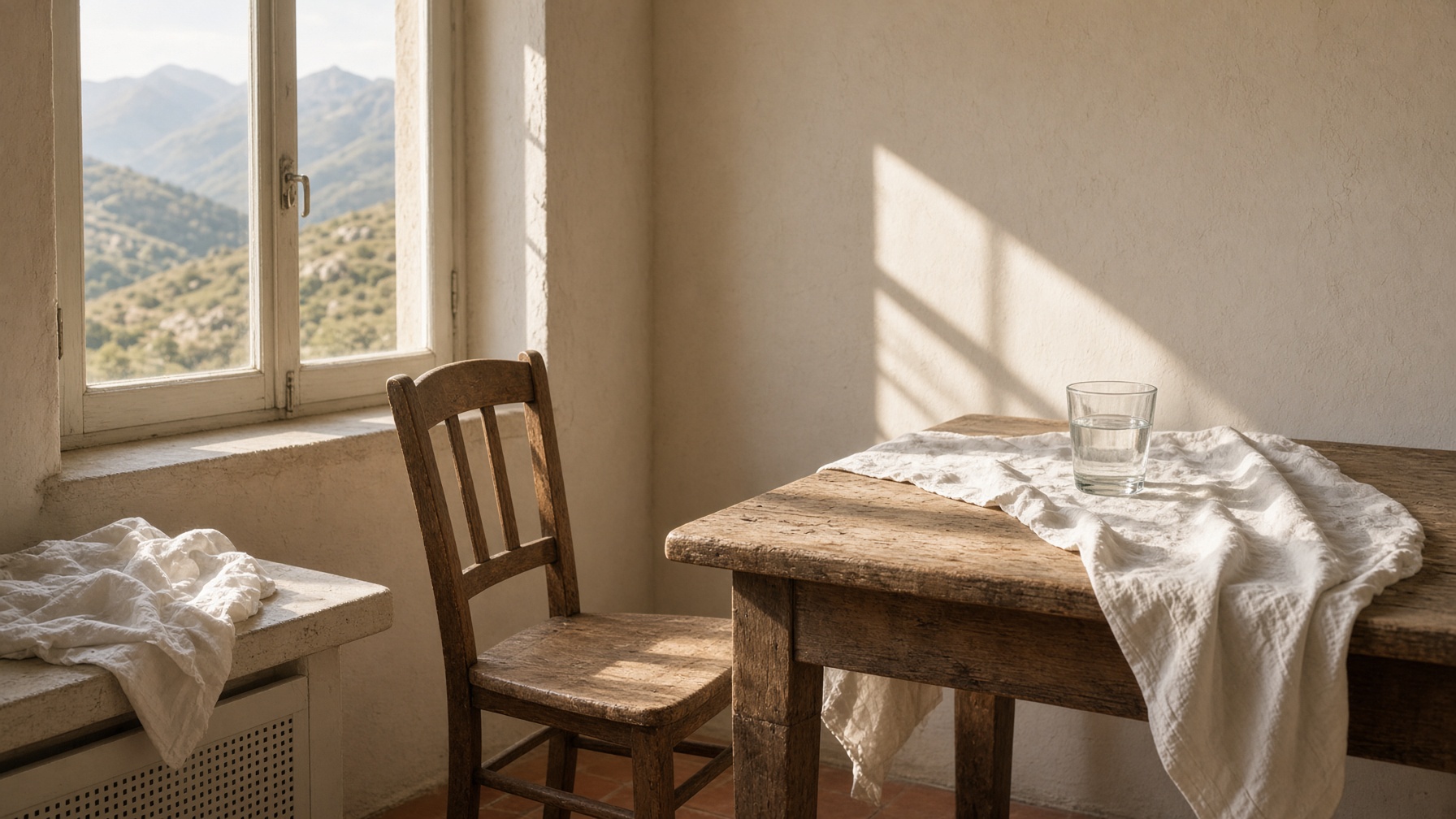
On Sunday, our table is set for one more person than will come.
Nobody announces it. A plate goes down beside the baked pasta. A tumbler waits near the bread. Someone folds a napkin and puts it at the end, where the kitchen light thins across the tablecloth. The habit is older than the people sitting there. Habits are the most durable form of geography.
That chair belongs to someone three thousand miles away, or to someone who died before the grandchildren were born, or to someone who left for America and stayed thirty-two forever in the family story. Sometimes it belongs to a woman whose name we no longer say correctly. Sometimes to a man remembered only by the shape of his hands. Sometimes it belongs to the town itself — Gallo Matese — a place most of the people at the table have never walked, and somehow still know.
I am from Gallo Matese.
Not as a tourist who found the lake on a map. Not as a researcher borrowing a town for atmosphere. As a Gallese — someone whose people come from Ru Uàllë, the mountain, the stone, the names that got misspelled at the port and kept their shape anyway.
This book grew from that belonging. I kept the documents where they hold, and I marked the legends as legends. Where a scene is composite, it says so. Where a story is family memory, it is offered as that — not as a census. I wrote it so the empty chair at our tables would have a place to sit in print: for the ones who left, the ones who stayed, and the ones who still say the town's name carefully.
If you are from Gallo, you will know what I got right by the places that sting. Tell me. The town is larger than one voice.
— Dominick Boiano