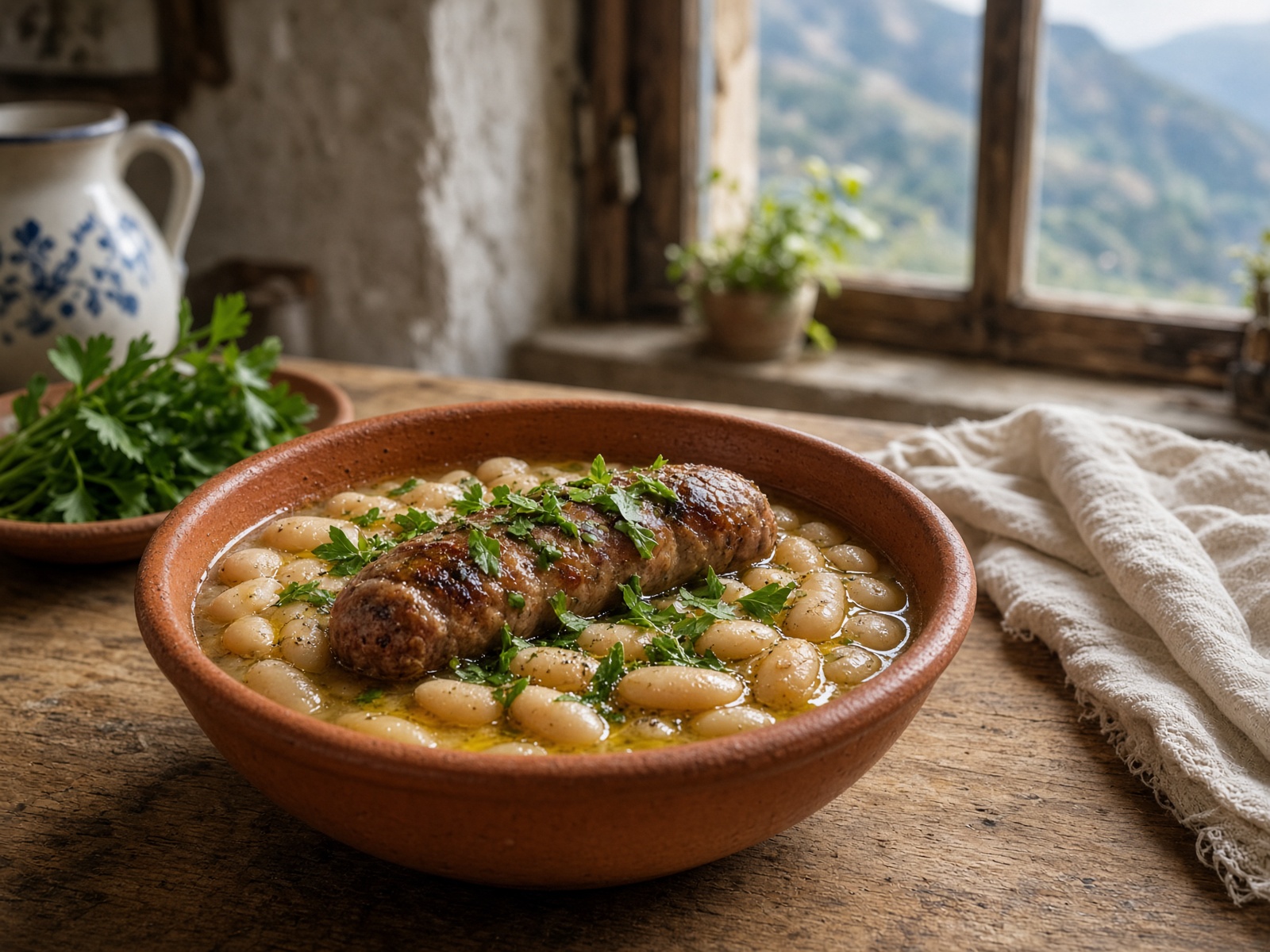
The fagiolo di Gallo Matese is small, white, and almost transparent once it is cooked. It was never a market crop. Families planted it with the local red maize, three seeds to a hole in May, and let the bean climb the corn the way a child climbs a brother. Slow Food put it in the Ark of Taste. Campania listed it among traditional products. The plant does not know any of that. It knows frost and drought and the patience of people who kept seed because throwing it away felt like throwing away a grandmother.
You eat it with frattaccio: polenta cooled on a board, cut, fried, served like crostini next to the soup. Or with cotiche and handmade sogn. Or with wild chicory that tastes faintly of the ditch it came from. The bean does not dominate. It receives. That is its whole character, and the character of the kitchen that kept it.
If you buy a bag from a mountain garden, cook it slowly and salt it late. If you cannot find this ecotype, cook another white bean and say the name of this one at the table anyway. Names are also a kind of broth.